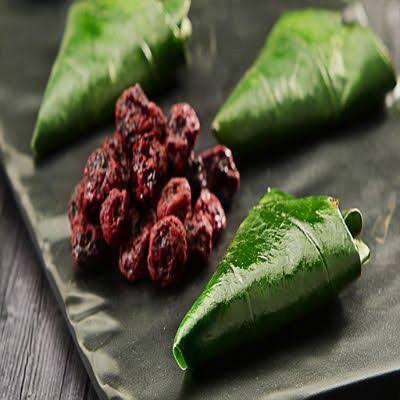
What the hell is kombucha? I keep seeing it everywhere now. Fermented, probiotic, good for the gut, good for this, good for that. We had kanji. Nobody called it anything fancy. Red or black carrots sat in water with spices, fermented in the sun, and the first sip could go straight up the nose and into the head. Years later, when wasabi arrived in our lives, there was a faint sense of recognition.
And guess what, the guy in Chandni Chowk would dunk moong dal ke ram ladoo, fried just right, straight into the kanji. That sour, sharp kanji getting into the hot fried ladoo was another thing altogether. Nobody was discussing probiotics or fermentation cultures. You just stood there and ate.
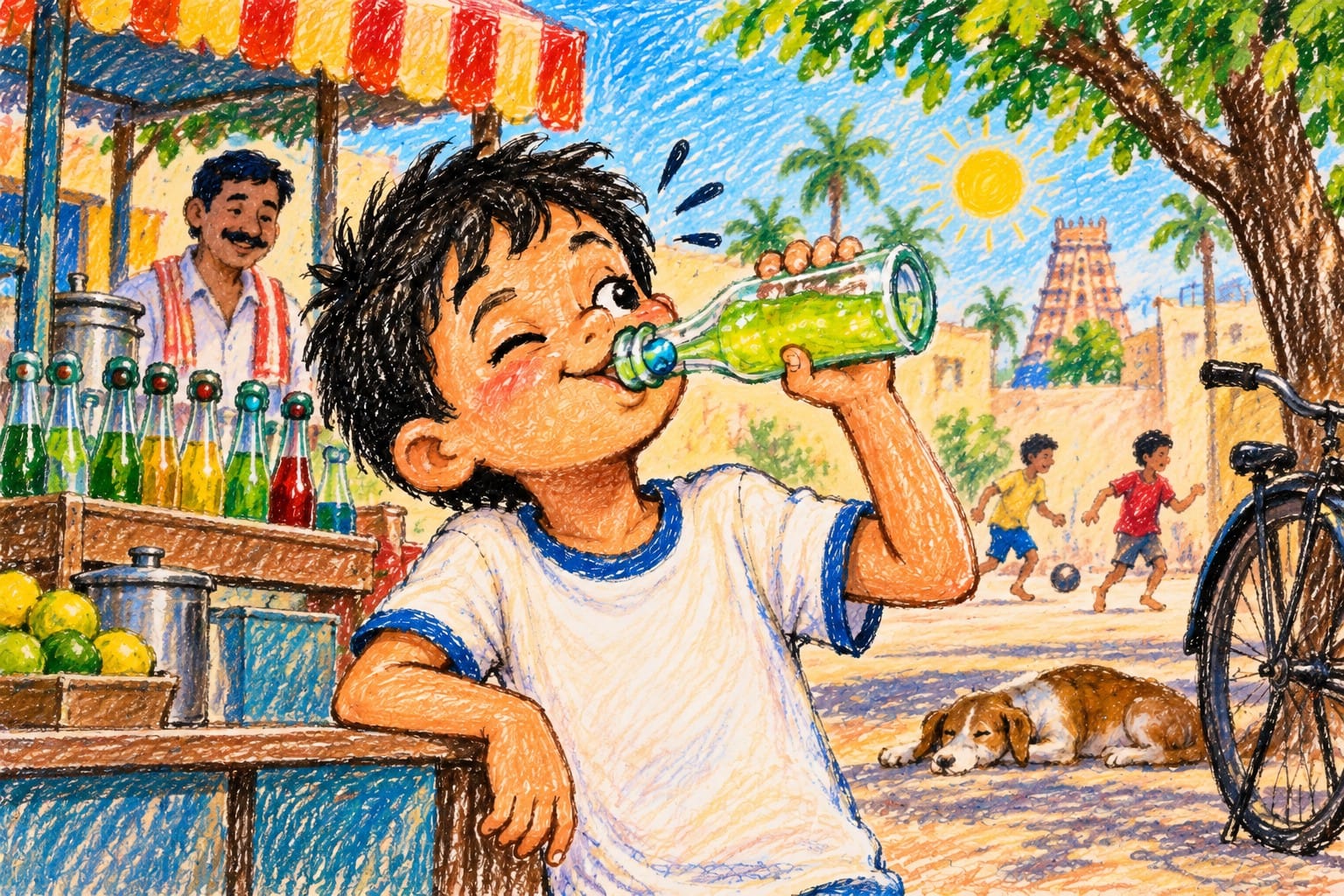
And while we are on things whose provenance nobody questioned, there was the banta bottle. That bottle was magnificent. Funny shape, thick glass, marble stuck in the neck, and some mysterious engineering none of us understood. God knows why that marble fascinated us so much. You could see it, hear it knocking around, but could not get to it, and somehow that was enough.
We had no idea where the water came from, where the bottle had been washed, who had washed it or how many hands it had passed through. The drink was poured into a glass of equally doubtful legacy, some salt of unknown origin went in and a quick mixing followed. Actually the real fun was sprinkling black salt straight into the neck of the bottle and watching the gas go berserk. CO2, soda gas, whatever it was, nobody cared. The bottle hissed, bubbled and foamed up. Today we want ingredient traceability. Back then we were more interested in the marble.
Phantom cigarettes fitted perfectly into that world. A sweet shaped like a cigarette, complete with a red tip, seemed perfectly normal. First lick the red end because somehow that bit tasted better, then hold it between the lips and pretend to smoke, and eventually eat the evidence. Nobody called a committee meeting.
Rooh Afza looked much more respectable because the bottle seemed faintly medicinal. That deep red bottle sat in the house for years. Nobody remembered buying it and nobody seemed capable of finishing it. A bit went into a jug, water was added, perhaps ice if there was any, and that was enough. Some people treated Rooh Afza cautiously and produced a pale pink drink. Others poured as if they had shares in the company and one glass could colour your tongue for the rest of the afternoon.
The label helped too. It had that old hakim-shop look, ornate and serious, enough to make the whole thing feel beneficial. Summer relief, cooling effect, Unani tradition or whatever else it suggested was accepted without cross-examination. Nobody turned the bottle around. Had Food Pharmer been around then, he would probably have been jumping around having a nervous breakdown, pointing at the sugar and wondering how an entire generation had survived.
Rooh Afza with milk was another matter. Rich, sweet, cold and heavy. And obviously we could not leave a perfectly good idea alone. At some stage we tried milk and Bournvita together. In our heads it sounded brilliant. In the glass it wasn’t. Bournvita refused to cooperate with cold milk. We put everything into the mixie hoping technology would solve the problem. It didn’t.
Then somebody discovered the more elaborate method: dissolve the Bournvita in a little hot milk first, then add cold milk. Technically it worked. Emotionally, nothing happened. No wow.
Mango shake never had this problem. Mango and milk simply understood each other. Thick mango pulp, cold milk, sugar because apparently mango itself was not sweet enough for us, into the mixie and out came something quite wonderful. Mango and milk was a tango.
Nimbu paani was around in various forms too, though shikanjvi somehow sounded grander. Nimbu paani was simple. Shikanjvi sounded intellectually Hindi, as if the same lemon had acquired a degree.
Aam panna came later into my memory. Roasted raw mango pulp, sugar of course, cumin and assorted spices, chilled properly. Smoky, sour, sweet and exactly right for summer. Today the same thing would probably arrive in a tiny bottle and be called a hand-crafted seasonal cooler.
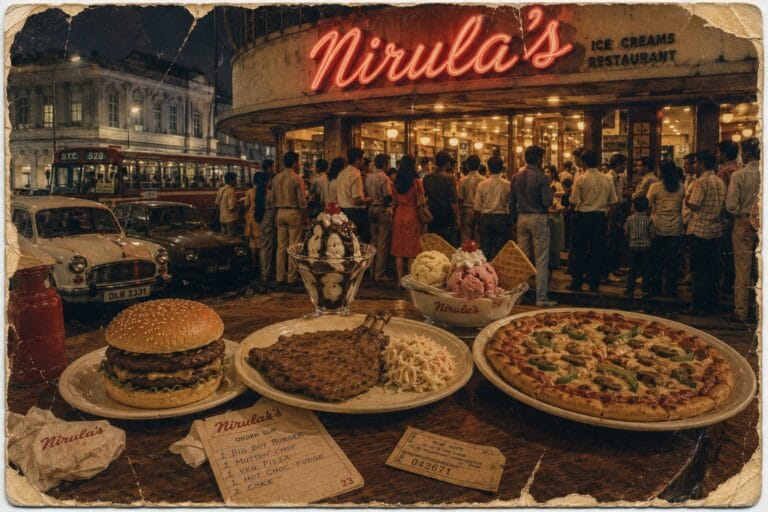
Maybe that is why I still remember the old cold-drink shop more fondly. Nothing had a backstory. In the seventies Coca-Cola bottles came in those wooden crates, and the crate itself made an entrance. It rattled and shook as it was carried, all those little glass bottles knocking into each other with that clink-clink-clink. The wood looked permanently darkened by years of use, spilled cola, dust and god knows what else.
The guy handling the bottles had his own little movement. He would pull one out, take that metal opener and strike it against the neck with a quick practised flick. A sharp little tap, cap off, metallic pop, fizz at the top. The shaking crate, the glass knocking, that quick strike at the neck — the whole thing was part of drinking Coke.
The Coke bottle itself was small, curvy and somehow glamorous. Cold enough to sweat in your hand, heavy glass and unmistakably foreign looking. You did not casually open one every afternoon at home. It was still a small treat, and once empty the bottle had to go back into the crate.
That same neighbourhood shop also had Chiclets. Tiny pieces of chewing gum, little boxes, a few coins, and enough pleasure to keep chewing long after the flavour had disappeared. Why we continued chewing a completely tasteless piece of gum for another half hour is one of those things childhood never had to explain.
Gold Spot was orange in a way no orange had ever been. Nobody cared. It was Gold Spot orange, its own colour, fizzy and sweet and completely unapologetic. Somewhere around all this came Campa Cola, and what I remember most is not even the drink but that motorcycle in the advertisement and the way the name was spoken. Caaampa Cola. There was swagger in it.
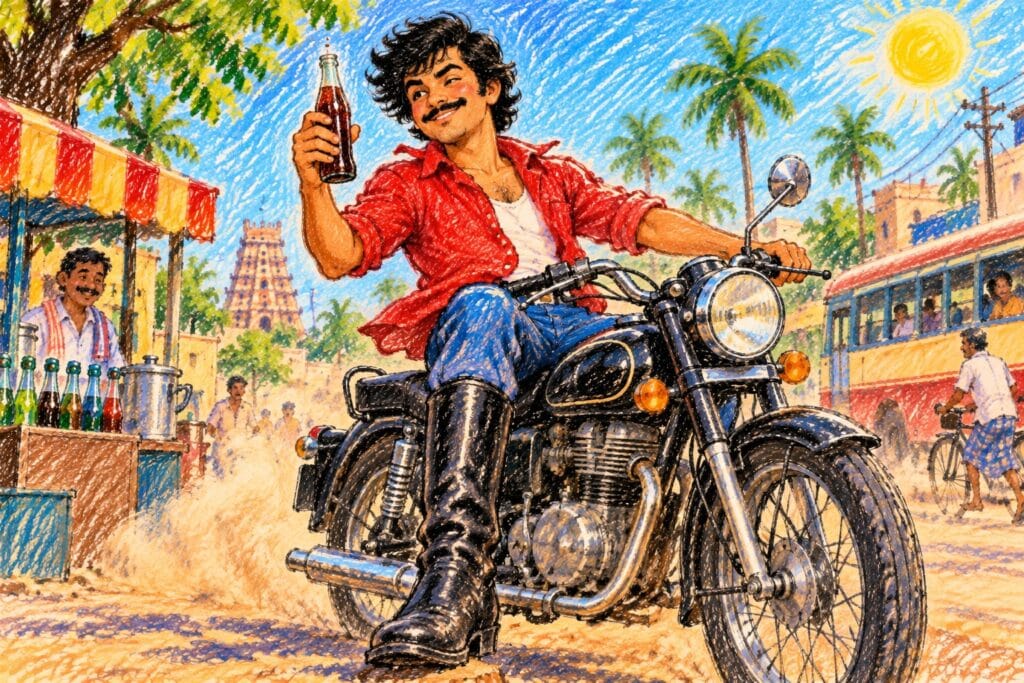
Thums Up went even further. The logo itself looked slightly aggressive, and eventually drinking cola appeared to require some form of physical danger. Bikes, cliffs, impossible jumps and then Taste the Thunder. Quite why a thirsty man had to nearly kill himself before opening a bottle was never clear, but it looked fantastic.
The funny thing is that while advertising was becoming more ambitious, at home Rasna was still being stretched because three cousins had landed up unexpectedly. Rasna was household engineering. The packet gave some estimate of how many glasses it made, but mothers considered this merely a suggestion. Add water, adjust sugar, shake it around, and suddenly the same packet had acquired extra capacity.
Orange, mango, pineapple, lemon. Nobody asked how much orange was actually involved in orange Rasna. Rasna orange tasted like Rasna orange and that was enough.
There were also those orange candies shaped like little orange slices. You did not bite them immediately; that would have been a waste. You sucked them slowly till the thick wedge became thinner and almost glassy, and then at the right moment cracked it inside the mouth. That final crunch was half the fun.
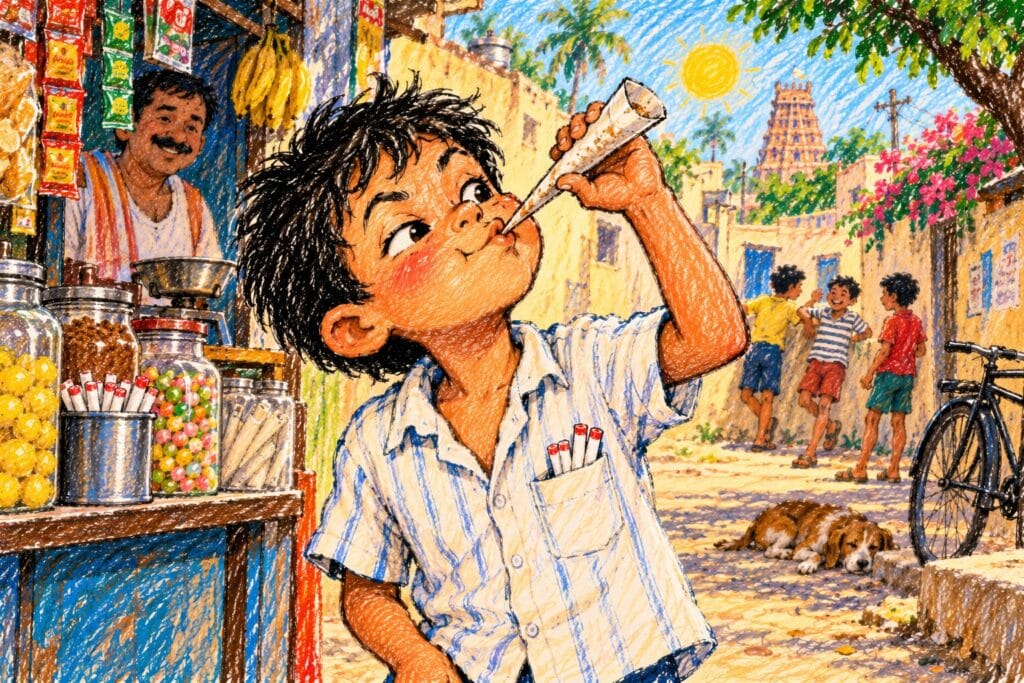
Somewhere during those summer afternoons would appear churan in those long paper cones. At first you simply sucked the powder from the open end, sour, salty, tangy and quite addictive. Then as the cone narrowed, things became more difficult. You shook it, tapped it, squeezed it and sucked harder. Eventually some churan remained trapped at the bottom and the paper itself had absorbed enough of the taste to become part of the product, so you ate the paper too. It seemed entirely logical at the time.
That whole period had very little anxiety around food. Something was tasty or not tasty, cheap or expensive, allowed or your mother said no. Nobody studied labels like forensic documents.
Take 5 Star. You ate it and then spent the next half hour continuing to find it between the teeth, behind molars and stuck to the gums. The chocolate bar had officially finished but clearly had no intention of leaving.
Then Frooti came and somehow that little tetra pack felt extremely modern. The straw stuck to the side, the tiny foil spot on top, and the pleasure of stabbing it. Sometimes it went in perfectly, sometimes the straw bent, sometimes the pack got squeezed and mango drink emerged from some unrelated corner.
But the real difference was that it was yours. The jug had always belonged to everyone. Rasna belonged to whoever happened to be around. A cold-drink bottle could be passed from one person to another without anyone behaving as if a biohazard had occurred. Frooti came with its own straw and somehow that straw created ownership.
Maaza meanwhile was thick, sweet and almost too substantial to be called a drink. Mango turned into liquid pudding, and very good liquid pudding at that when properly cold.
Not every new drink succeeded. Nestea Ice Tea must have looked brilliant in a presentation somewhere. India is hot. India loves tea. Therefore India will love cold tea. Except India mostly said no. Tea was supposed to be hot, preferably milky, sugary and made by somebody else. Cold tea felt less refreshing and more like somebody had forgotten the cup on the table.
Pepsi understood mood better than logic. It attached itself to cricket, films, music and young people making noise. Yeh Dil Maange More worked because by then the country did want more. Not only more cola, but more choice, more brands, more fun, more everything. The appetite had already arrived.
And now here we are with kombucha, protein water, electrolyte water, cold brew, zero sugar, natural sugar, probiotics, prebiotics and assorted bottles telling us what they will do for the gut, skin, energy, sleep and probably our inner peace also. Influencers are having a field day. One reel frightens you about what is already in the fridge and Blinkit is only too happy to send the replacement before the panic has settled.
The manufacturers have understood the game too. Move one ingredient to the front, put the drink in a nicer bottle, add a little beige or green to the label and suddenly it has a new personality. Rooh Afza never worked this hard. Neither did the banta bottle. One looked mildly medicinal, the other had a marble stuck in its neck, and somehow that was enough.
Maybe we were gullible. Maybe we are over-informed now. I only know that the old world had its own logic. Kanji could hit you in the nose, banta could fizz over with black salt, a Coca-Cola crate could announce itself before you even saw it, and a churan cone could end with the paper being eaten without anybody finding this particularly odd.
Thums Up told us to Taste the Thunder. Pepsi said Yeh Dil Maange More.
We listened.
Nobody checked the label first.