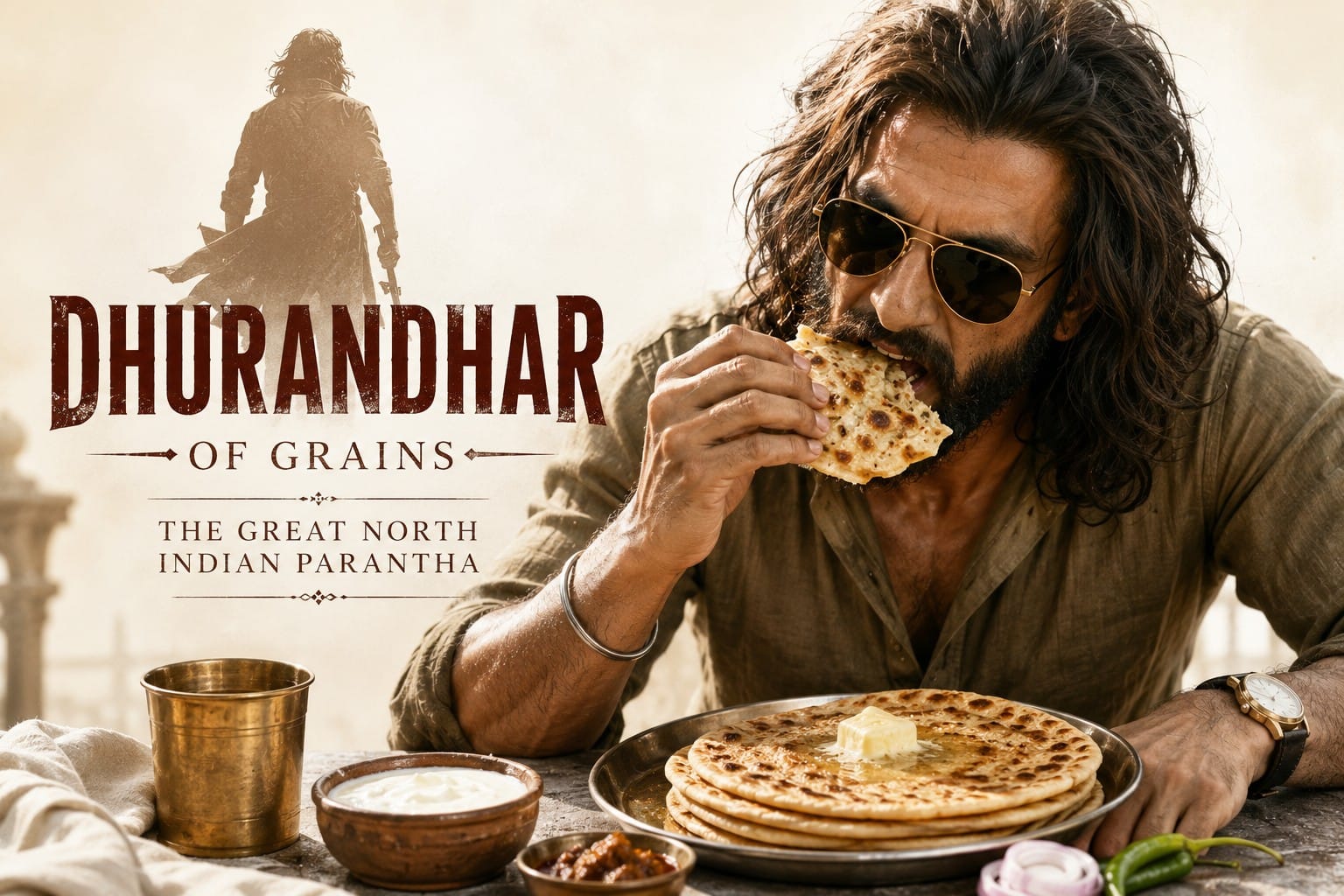
There are breads. There are flatbreads. And then there is the North Indian parantha.
The rest are respectable, but they are playing in a different league.
If wheat ever decided to nominate an ambassador, it would almost certainly choose the parantha. Not the roti. The roti is the dependable civil servant of the Indian kitchen—punctual, efficient and happy to report for duty every single day. The naan is the occasional celebrity, arriving only when guests do. The kulcha has its loyal fan club. The poori turns every meal into a celebration. The bhatura enters like a Punjabi wedding baraat, making noise, demanding attention and leaving everyone wondering if they overdid it.
The parantha doesn’t need an introduction. It carries itself with quiet authority. It has no insecurity about being simple because it knows exactly what it brings to the table. Stuff it with potatoes, cauliflower, radish, paneer, onions, peas or almost anything your imagination permits, and it still remains unmistakably a parantha.
That is the mark of royalty. Everyone recognises it the moment it arrives.
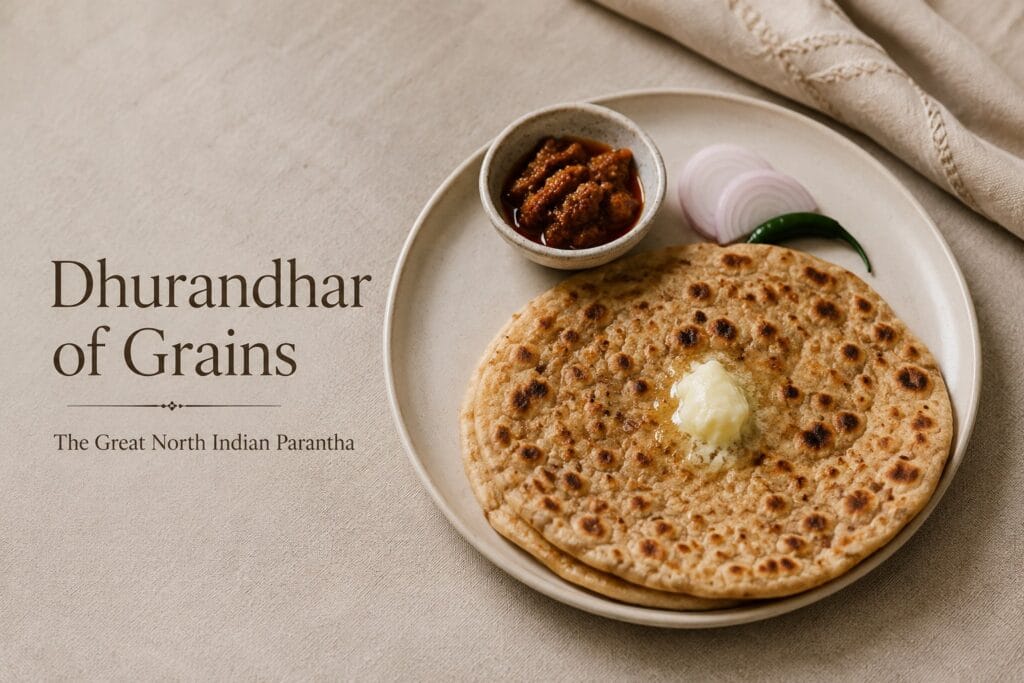
Every North Indian household grows up believing that almost anything edible can be stuffed inside a parantha. Potatoes, cauliflower, radish, paneer, peas, lentils, onions, spinach, fenugreek, bathua, leftover vegetables from yesterday’s dinner—nothing is beyond the imagination of a Punjabi grandmother. I remain convinced that, given enough persuasion, she could produce a perfectly respectable Wi-Fi-enabled parantha.
The beauty of a parantha lies not merely in what goes inside but in what happens outside. It begins life as an unassuming ball of dough and, after a generous courtship with ghee, emerges from the tawa with golden freckles, crisp edges and a fragrance capable of waking neighbours three houses away. Nutritionists call it excessive. I call it proof that God occasionally smiles upon mankind.
No respectable parantha travels alone. It arrives with an entourage—pickle, thick curd, green chillies, perhaps a bowl of dahi, and if the cook is particularly affectionate, a tall steel tumbler of lassi. But the true companions of the parantha are butter and malai.
A hot parantha with a slowly melting cube of Amul butter or, even better, a generous dollop of freshly churned white butter or malai is one of those combinations that makes you briefly question the wisdom of preventive cardiology. The butter melts into every crack and crevice, quietly reminding you that happiness is usually yellow.
Unfortunately, age has an irritating habit of inviting new guests to breakfast. The cardiologist arrives unannounced. The endocrinologist joins him. Every year the lipid profile lands on your desk like a confidential performance appraisal. Suddenly breakfast becomes a three-way negotiation between your tongue, your arteries and your pancreas.
Over the years I have therefore perfected what I proudly call the Parantha Cheat Code.
The heart wants two, perhaps two-and-a-half paranthas. The arteries politely clear their throat and whisper, “Behave.” The brain, having spent decades resolving boardroom conflicts, quietly brokers a compromise.
There are, of course, people who eat paranthas without ghee. I don’t judge them. I merely feel sorry for them. A parantha without ghee is technically still a parantha, much like decaffeinated coffee is technically still coffee. Something essential has quietly gone missing.
Age, unfortunately, forces compromises. The doctor looks at your reports. Your family looks at your waistline. You look longingly at the butter. So I have evolved a completely unscientific technique. I gently separate the parantha into its flaky layers and eat them one at a time. Somehow the meal feels longer, more satisfying and my brain is convinced it has consumed two paranthas while the stomach knows it has only dealt with one. The human mind is wonderfully easy to fool when food is involved.
And honestly, a small cube of Amul butter, a spoon of homemade white butter or a little malai isn’t going to bring civilisation to an end. Walk a little longer in the evening, spend some extra time with the dumbbells and make peace with yourself. Whether the cardiologist agrees is a discussion for another day. Breakfast should not come with footnotes and medical disclaimers.
Paranthas also know their seasons. Winter belongs to mooli, gobhi and bathua. There is something magical about biting into a hot mooli parantha on a foggy Delhi morning or tearing into a gobhi parantha fragrant with ajwain and green chillies. Bathua arrives quietly every winter and reminds you why seasonal food still matters. Summer, on the other hand, asks for simpler pleasures—a plain parantha with ghee, an aloo parantha or perhaps paneer if the mood is festive.
And then there are combinations that simply feel right. A plain ghee-laden parantha with egg bhurji. An aloo parantha with homemade white butter. Gobhi with thick curd and a sharp mango pickle. Mooli with a steaming cup of masala chai.
Call them breakfasts if you like.
North Indians know they are much more than that
These are emotional support systems.
Curiously, the parantha is also India’s most democratic food. It is equally at home on a charpai in a Punjab village, inside a steel tiffin travelling to an office in Delhi, wrapped in newspaper during a train journey, or served at a bustling Murthal dhaba where truck drivers, CEOs, students and honeymooners all become equal before the tawa. Few foods erase social distinctions quite like a hot parantha.
Like every great institution, however, the parantha has suffered at the hands of modernity. Restaurants now advertise quinoa paranthas, multigrain paranthas, low-fat paranthas, air-fried paranthas and, my personal favourite, gluten-free paranthas. A gluten-free parantha has about as much authenticity as sugar-free jalebi or decaffeinated espresso. Some ideas deserve to remain untried.
Equally tragic is the frozen supermarket parantha. It looks like a parantha, calls itself a parantha and even carries photographs of smiling Punjabi families on the packet. It is none of the above. A real parantha has a very short life expectancy. It must travel directly from the tawa to the plate and then immediately into your hands. Delay the journey by ten minutes and it begins to lose its soul.
People often ask me which is the greatest parantha. It’s one of those impossible questions that North Indians can debate for hours without ever reaching a conclusion. My answer changes with the weather. Winter belongs to mooli and bathua. Gobhi is forever dependable. Paneer is for days when you’re feeling indulgent. But aloo… aloo is eternal.
The aloo parantha has survived every food trend thrown at it. Like Kishore Kumar’s songs, old Hindi films and mothers who continue to insist that you’ve become too thin, it simply refuses to go out of fashion. You may discover sourdough, avocado toast and quinoa bowls, but sooner or later you find yourself back in front of a tawa, waiting for that familiar golden disc to arrive with a generous dollop of butter melting over it.
Growing older has forced me to become friends with words I never cared about in my twenties—calories, carbohydrates, cholesterol and triglycerides. Every annual health check introduces a few more numbers that apparently deserve my attention. Yet growing up in North India taught me something that no nutrition chart has ever been able to erase.
Never refuse a hot parantha.
The doctor will still be there tomorrow, ready with fresh advice and another lecture. The parantha, however, has a very small window of perfection. Fresh off the tawa, crisp outside, soft inside, with butter quietly disappearing into its layers, it is one of life’s fleeting pleasures. Five minutes later it is still good. Fifteen minutes later it is merely food.
Life, I have realised, behaves very much like a parantha. Some moments don’t improve with waiting. They ask to be embraced while they are warm, imperfect and gloriously alive.
Before you go…
If the parantha has left you emotionally stirred and physically hungry, continue with:


Parantha is irresistible and moment I read your post ordered it the way you suggested trave time from pan to table under 30 seconds made a quantum jump in taste and galloped two instead of one Simple recipe perfected by Punjabi sect giving head on competition to Pizza and burratos Keep wring in your creative manner and will stomach it all
Your articles are simply brilliant !! Great humour !! Please keep it up 🙏