How an Entire Generation Graduated Without a Syllabus
Every generation has its coming-of-age story.
Ours didn’t come from therapists, influencers, dating apps or relationship podcasts.
It came from movie posters, dog-eared paperbacks, cassette tapes and a VCR with a permanently overworked pause button.
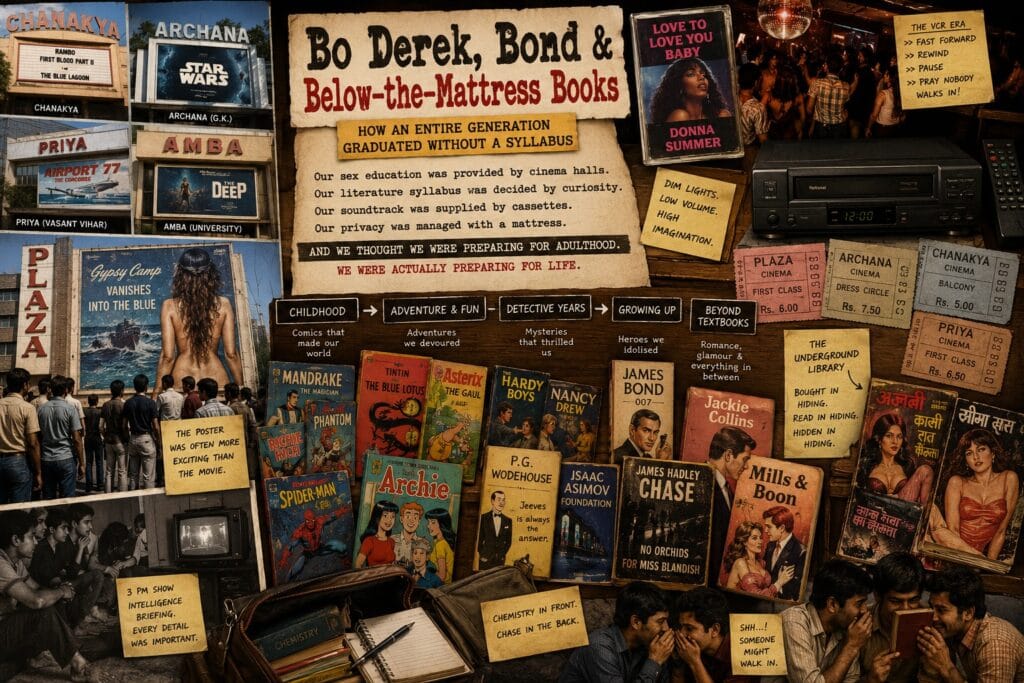
Long before the internet decided what we should watch, there were only a handful of Delhi theatres that shaped our adolescence. Chanakya Cinema was the undisputed king of English films. Archana Cinema catered to South Delhi. Priya Cinema occasionally joined the party, while Amba Cinema surprised us every now and then.
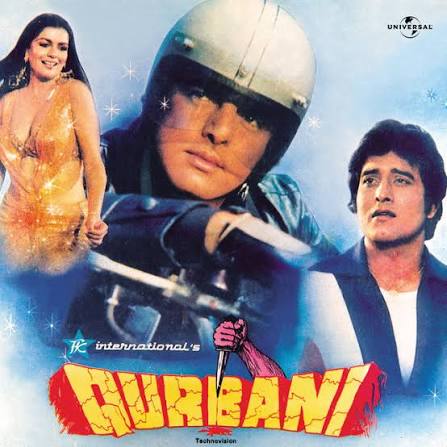
The soundtrack of our adolescence had already been set when Aap Jaisa Koi exploded into our lives. Nazia Hassan became an overnight sensation and Zeenat Aman redefined glamour for an entire generation. We had barely recovered when English cinema arrived to complete whatever damage Bollywood had started.
Nobody admitted it publicly, but everyone knew why certain films drew queues outside the theatres.
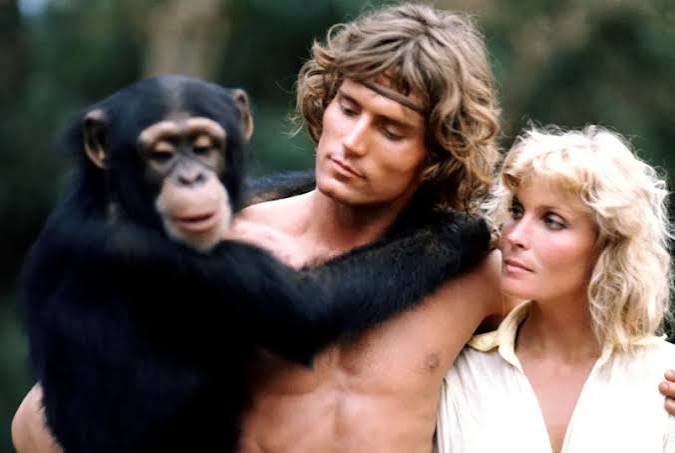
Tarzan the Ape Man had absolutely nothing to do with Tarzan. Poor fellow swung from vine to vine while we patiently waited for Bo Derek to appear. Friends returned from the matinee like intelligence officers returning from a classified mission.
“First scene… around forty minutes.”
“Second one… don’t blink.”
“There is another one later… just for a few seconds.”
Nobody remembered the plot.
Everybody remembered the timings.
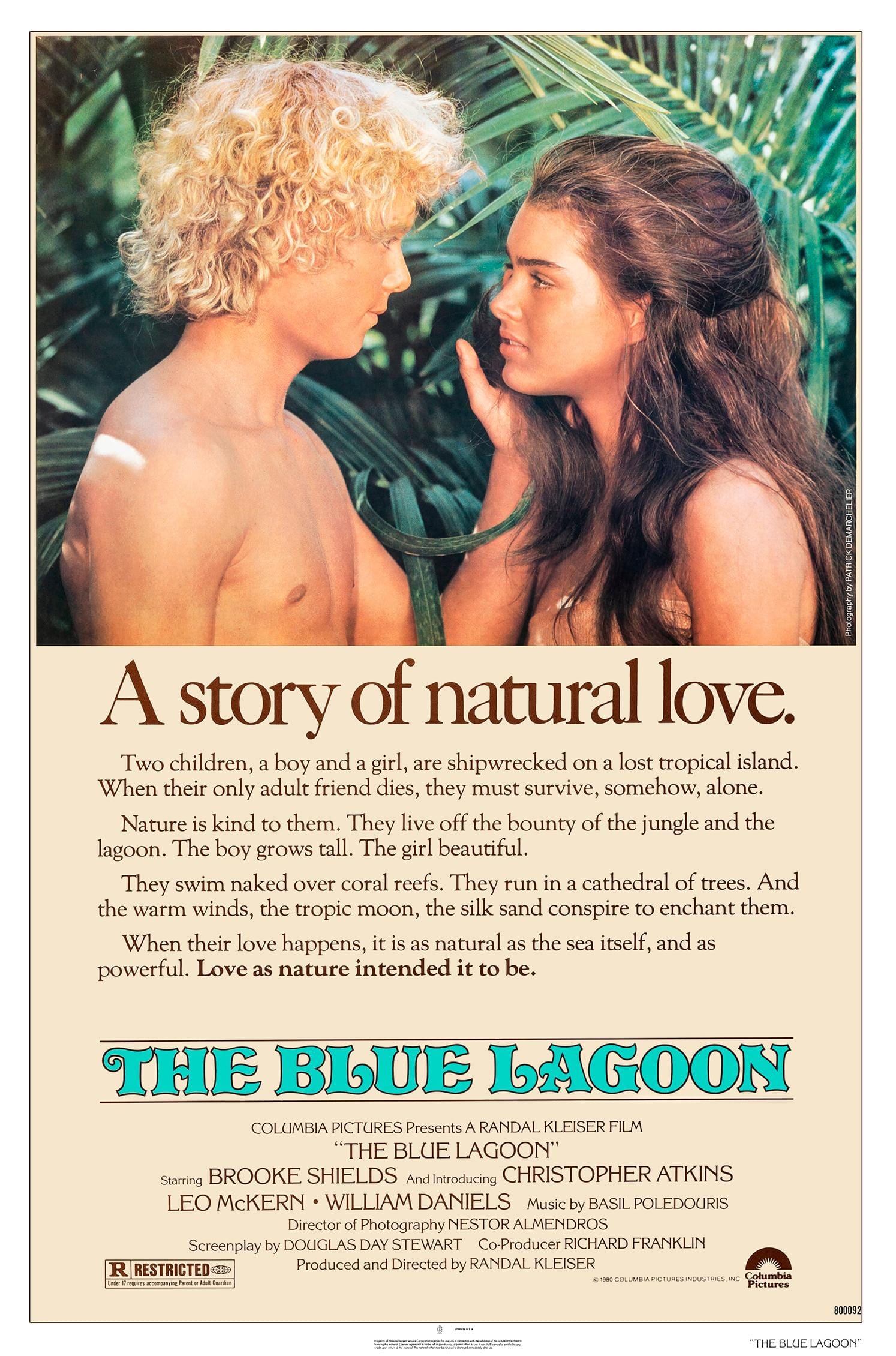
Then there was The Blue Lagoon starring Brooke Shields, which acquired mythical status long before most of us had actually seen it.
But the undisputed heavyweight champion of adolescent distraction was the giant poster outside Plaza Cinema for Gypsy Camp Vanishes into the Blue. It stretched from the ground floor almost to the third floor. The heroine’s flowing hair managed the impossible task of satisfying the censors while ensuring every teenage boy stopped dead in his tracks.
We stood below pretending to discuss cinema.
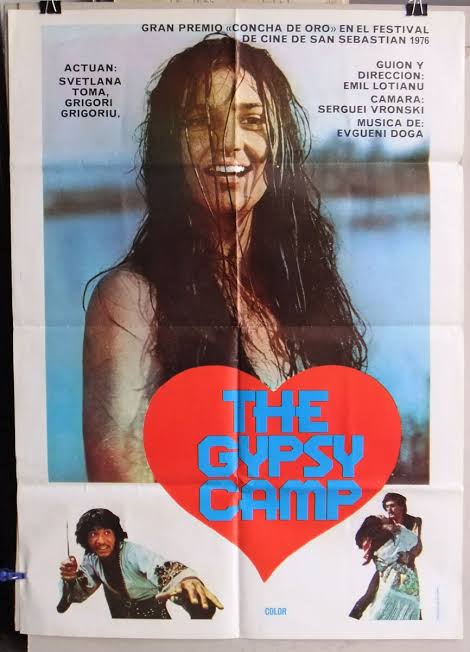
Nobody was discussing cinema.
Of course, not every English film was about teenage curiosity. Star Wars at Archana was an event. The Airport disaster films, detective thrillers and comedies had their loyal audiences too.
But if we’re honest, our eyes always drifted towards the posters announcing what was “Coming Soon.”
The posters were often more exciting than the films.
Then came the greatest technological revolution of our teenage years.
The VCR.
Suddenly, forbidden cinema entered respectable drawing rooms.
One friend owned a VCR, which automatically converted his house into the headquarters of highly confidential “movie appreciation sessions.” Unfortunately, the VCR lived in the living room while his mother cooked lunch barely twenty feet away.
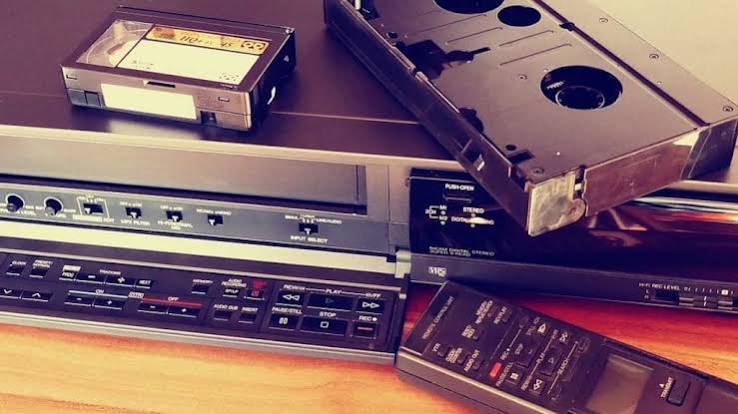
Every ring of the doorbell caused instant panic.
Every creak of a door froze us.
The maid always chose exactly the wrong moment to dust the television.
One finger remained permanently poised over the remote.
Switch.
Rewind.
Fast forward.
Pause.
“No… you’ve gone too far.”
“Back… back… STOP!”
The engineering precision with which we located a two-second scene would probably have qualified us for ISRO.
Poor Tarzan never stood a chance.
Neither did the monkeys.
While the movies were quietly hijacking our hormones, another equally dramatic revolution was unfolding on our bookshelves.
Growing up could almost be measured by what lay beside your bed.
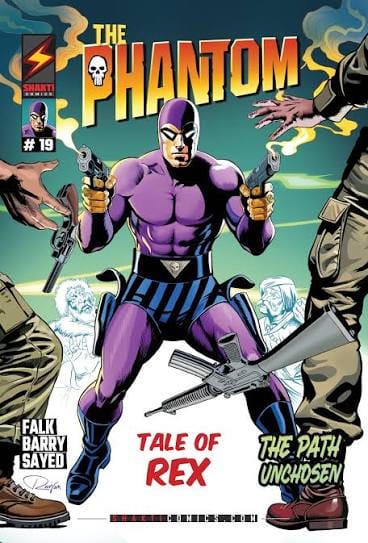
It began with the comforting world of comics. Phantom, Mandrake the Magician, Richie Rich, Little Lotta, Batman, Spider-Man and the rest of the superheroes slowly surrendered their
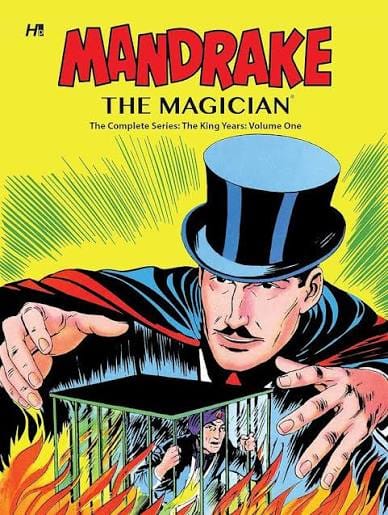
pride of place. They gave way to the glorious adventures of Tintin, Asterix and Archie’s, where Archie, Betty, Veronica, Jughead and Reggie taught us that teenage life could revolve around milkshakes, friendships and impossible love triangles.
And then came Garth.
Compared to everything else we were reading, the Garth comic strip pushed the envelope well beyond what our adolescent minds were accustomed to. Strangely enough, it appeared every day at the bottom of a page in the Hindustan Times. Looking back, I still wonder how it ever made it past the editors. It left remarkably little to the imagination and was, for many of us, far more compelling than the day’s headlines.
In fact, it was probably the first reason I read a newspaper.
Well… almost.
Every morning, my father would be deeply engrossed in the Hindustan Times while I hovered nearby with unusual patience.
“Dad… are you done with this page?”
I wasn’t waiting for Parliament, international affairs or the editorial. I wanted that particular page carrying Garth. He would quietly hand it over and continue reading.
To this day, I don’t know whether he genuinely believed I had suddenly become interested in newspapers or whether he knew exactly what fascinated his teenage son and simply chose to look the other way.
Maybe fathers understand more than they ever admit.
Then came the detective years.
Hardy Boys, Nancy Drew and the perfectly crafted murders of Agatha Christie sharpened our instincts. The more literary among us discovered the delightful wit of P. G. Wodehouse, where Jeeves effortlessly rescued Bertie Wooster from one glorious disaster after another. The science geeks escaped into the futuristic worlds of Isaac Asimov.
The rest of us preferred our heroes a little rougher.
Enter James Bond and James Hadley Chase.
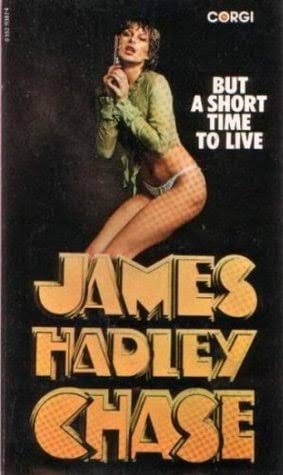
Suddenly the stories became faster, darker and infinitely more glamorous. Beautiful women. Ruthless villains. Fast cars. Exotic cities.
Chase novels travelled from one friend to another like contraband. Covers were folded, titles hidden inside textbooks and every borrower promised, “I’ll return it tomorrow.”
Tomorrow usually meant two weeks later.
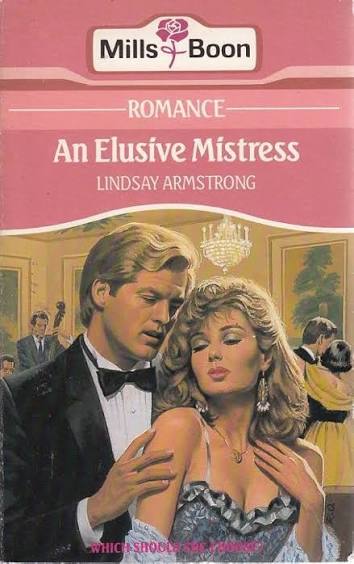
Our female classmates—or so we liked to believe—were swooning over Mills & Boon romances featuring tall, dark and devastatingly handsome men who always declared eternal love in the final chapter. Before long, many graduated to the glamorous and scandalous world of Jackie Collins, where Hollywood excess made Mills & Boon seem almost innocent.
Of course, that’s what we told ourselves.
The truth was much simpler.
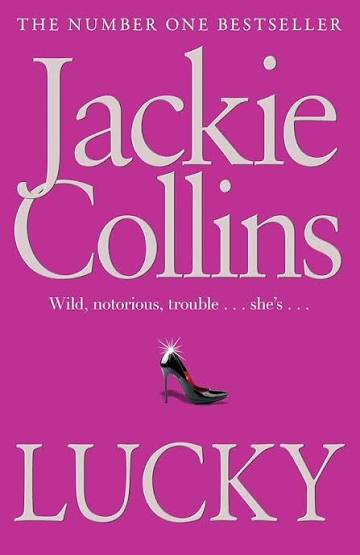
The boys secretly borrowed Jackie Collins.
The girls quietly read James Hadley Chase.
Everyone was curious.
And then there was the underground literary economy.
Every neighbourhood had that one friend whose older cousin, mysterious uncle or obliging roadside bookseller somehow procured those infamous Hindi paperbacks sold discreetly on railway platforms and pavement stalls. Their lurid covers alone could send teenage heart rates into overdrive.
These books never occupied respectable bookshelves.
They lived beneath mattresses.
Inside old newspapers.
Behind geography atlases.
Sandwiched between chemistry textbooks.
Owning one instantly elevated your social standing.
Reading one required the stealth of a commando operation.
“Someone’s coming!”
“Hide it!”
“Quick… pick up the chemistry book!”
Half the thrill came not from the pages themselves but from the possibility of getting caught.
Long before passwords, private browsing and encrypted folders, our generation had already mastered the art of concealment.
And then there was the music.
If movies ignited the imagination and books fuelled the fantasy, music supplied the soundtrack.
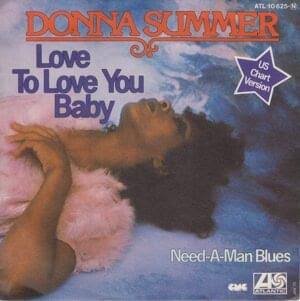
The moment “Love to Love You Baby” floated through dimly lit rooms at a birthday party or a friend’s house, time slowed down. Conversations became whispers. Every awkward teenager suddenly believed romance was just one slow dance away. Nobody really knew what they were doing, but everyone was convinced this was exactly what adulthood looked like.
Looking back, it’s hilarious how we assembled our education from such improbable teachers.
A movie poster outside Plaza.
A whispered recommendation in the school corridor.
A James Hadley Chase novel borrowed “just for one night.”
A VCR that threatened to expose us every time the doorbell rang.
A cassette playing in semi-darkness.
We genuinely believed cinema, books and music were preparing us for adulthood.
In reality, they were preparing us for curiosity.
For friendship.
For laughter.
For imagination.
For embarrassment.
For stories that we still tell half a century later.
The syllabus was hopelessly inaccurate.
The lessons were wildly exaggerated.
The examinations were entirely self-conducted.
But somehow that unofficial curriculum produced a generation that still smiles whenever someone mentions Chanakya, a VCR, a dog-eared James Hadley Chase novel, an old disco track or a giant movie poster outside Plaza.
We thought we were learning about love.
We were really learning about growing up.
And looking back, I wouldn’t change a single lesson.
And somewhere in those memories is my father, quietly handing me the newspaper without asking a single question.
Maybe that was his way of saying, “You’ll grow up soon enough.”
He was right.