I have always believed some cities are destinations. Others are moods.
Kolkata is a mood.
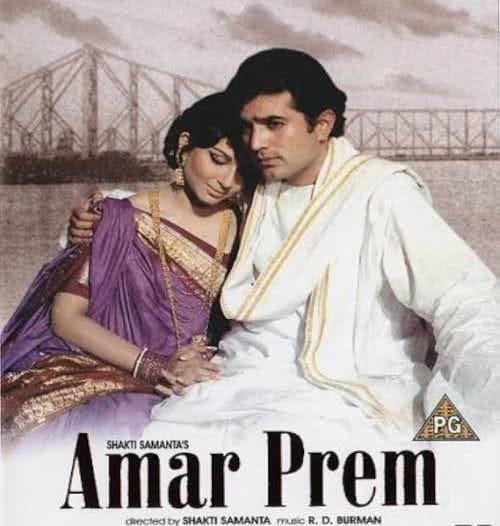
Every generation discovers Kolkata through a different storyteller. Mine discovered it through Amar Prem. Even today, when someone mentions Kolkata, I don’t think of Victoria Memorial or Park Street. I see Rajesh Khanna in a dhoti, his head resting in Sharmila Tagore’s lap, humming Chingari Koi Bhadke… A lantern sways lazily from the roof of a wooden boat drifting on the Hooghly under the shadow of the Howrah Bridge. That image has become Kolkata in my mind.
The next generation perhaps met the city through Kahaani. Vidya Balan didn’t merely walk through Kolkata; she allowed the city to become the lead actor. The trams, the rain, the Durga Puja crowds, the narrow lanes, the old buildings and that constant feeling that somebody, somewhere, was silently watching you—it was Kolkata that held the film together.
More recently, the OTT series Brown has shown us another Kolkata. Less postcard, more peeling paint. Less nostalgia, more melancholy. Damp walls, fading colonial buildings, lonely lanes, old clubs, weary policemen and a city that wears its scars with remarkable dignity. Most cities change every decade. Kolkata merely changes its cinematographer.
The strange thing about Kolkata is that it has never seemed terribly interested in catching up with the rest of the world. It appears perfectly happy remaining where it is. The moment you step out of the airport, the city wraps itself around you—not with speed, but with nostalgia. Even the air feels older. The humidity carries history. The yellow Ambassador taxis, the trams, the crumbling mansions, the endless debates over tea, the intellectual arrogance, the complete absence of hurry… the city still carries the lingering perfume of the Raj. Please don’t mistake this for criticism. I find it immensely comforting. Every Indian city wants to become Singapore. Kolkata still has the courage to remain Kolkata.
Which brings me to food.
I have never understood why Bengali cuisine isn’t spoken of in the same breath as Awadhi, Chettinad or Wazwan. It is one of India’s greatest cuisines and one of its most underrated. Bengalis have spent centuries perfecting recipes but almost no time marketing them. Typical Bengali priorities.
One thing about Bengali cuisine becomes obvious very quickly. The first instinct appears to be: “Fry it.”
Okra? Fry it.
Cauliflower? Fry it.
Potatoes? Fry them.
Beans? Fry them too.
Fish? Obviously.
Prawns? Certainly.
Pooris, lucchis, Radha Ballavi… absolutely.
Given half a chance, I suspect the entire animal and vegetable kingdom would find itself gently lowered into hot mustard oil. If mustard oil producers ever decide to institute a Lifetime Achievement Award, they should simply hand it to Bengal and close nominations forever.
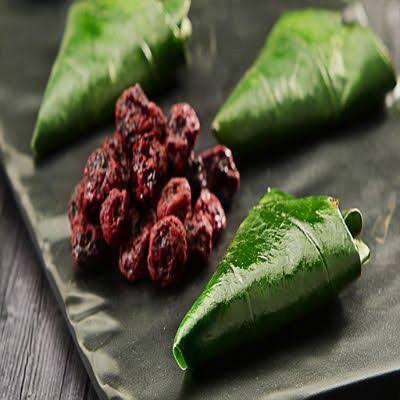
That doesn’t mean Bengalis don’t appreciate steaming. They simply steam with imagination. Whenever you see the magical word Bhapa, you’ve entered a different universe. Bhapa Ilish, Bhapa Maach, Daab Chingri, Paturi… steaming here isn’t about healthy eating. It is about trapping flavour. Mustard, coconut, green chillies and fish quietly perform alchemy inside banana leaves or sealed pots until the lid is lifted and the room falls silent.
And yes, the humble brinjal enjoys a social status in Bengal that would make other vegetables deeply insecure.
My first stop is almost always Aheli, tucked inside the Peerless Inn. The food is excellent, but the real entertainment is the waitstaff. Ask them about a dish and they’ll explain it with such authority that you’ll begin to suspect their ancestors personally trained the Nawabs and invented Bengali cuisine in their spare time. In Kolkata, food is never merely food. It is history, politics, literature and family gossip served on a brass plate.
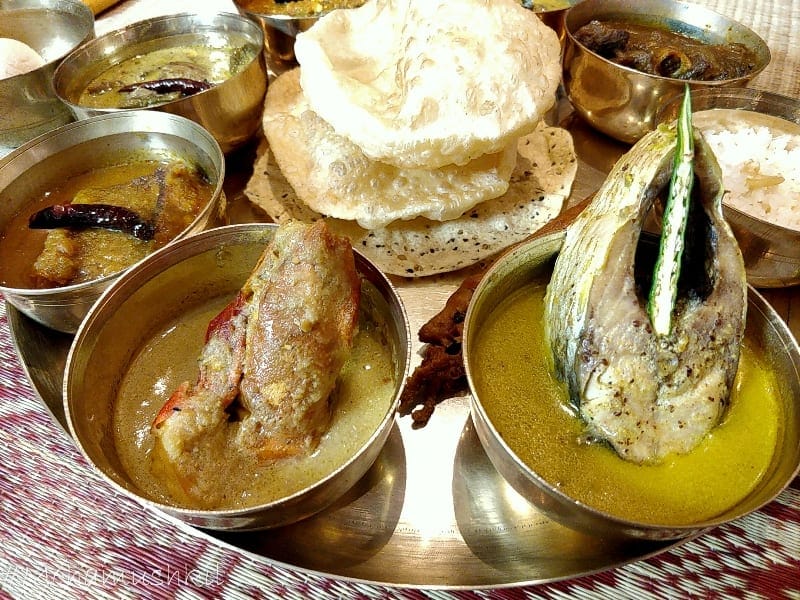
If you eat fish, order Hilsa—however the chef is preparing it that day. Pair it with steaming rice and a hot lucchi or Radha Ballavi. Hilsa is not merely a fish; it is an examination. Every bite demands concentration because of the bones. Bengalis insist that the more bones a fish has, the tastier it is. After a while you stop fighting the fish and surrender to it. Eating Hilsa is less a meal than a spiritual exercise.
Vegetarians shouldn’t feel deprived. Aloo Posto, with its creamy poppy-seed paste, is one of India’s most seductive dishes. It looks simple enough to dismiss and tastes too good to forget. Banana flower curry deserves equal respect. Don’t leave without asking for tomato chutney. Ask for plenty.
Now for a confession.
I think Kolkata’s Chinese restaurants are among the most overrated culinary institutions in India.
Before influencers sharpen their chopsticks, let me explain.
They were probably outstanding fifty years ago when Chinese food itself was an adventure. But the rest of India has quietly moved on. Ingredients have improved. Mushrooms actually taste of mushrooms. Vegetables have texture. Sauces have become subtler. There is less cornflour, less ajinomoto (more on that another day) and thankfully much less soy sauce emptied over everything in sight.
Not that I don’t miss the old stuff.
There was something gloriously dishonest about Chinese food in the seventies and eighties. Chowmein glistening with oil, heroic quantities of cabbage and onions, tiny shavings of chicken requiring archaeological excavation to locate, vegetables cut according to Chottu chef’s emotional state and soy sauce poured with astonishing optimism. Add vinegar with green chillies floating inside like lazy crocodiles and suddenly life felt complete.
Then came Chilli Chicken. Dubious cubes of chicken tossed violently in a giant wok with onions, capsicum, green chillies and a mysterious dark sauce whose recipe should probably remain under the Official Secrets Act. Dry or with gravy—it hardly mattered. Every plate was polished clean.
And American Chop Suey!
What a magnificent fraud. Somebody deep-fried noodles, drowned them in sweet-sour tomato gravy, crowned the whole thing with a fried egg and called it American. It was neither American nor Chop Suey. It was delicious.
Soups were refreshingly uncomplicated. Sweet Corn. Talumein. Manchow. End of discussion. Momos, dim sums, Shui Mai and their sophisticated cousins hadn’t yet invaded our vocabulary. They deserve a separate essay.
People will insist you visit Flurys. You should. It is part of Kolkata’s DNA. Personally, I have never quite understood the hysteria. The pastries are good. The nostalgia is better. The people-watching is probably the finest item on the menu.
Bijoli Grill deserves a mention too. Honest food. No theatrics.
Outside Kolkata, good Bengali food remains surprisingly elusive—unless you happen to live around Chittaranjan Park in Delhi. Thankfully, Zomato has democratised geography. Today, Kosha Mangsho can travel farther than most Bengalis.
For years, my quarterly pilgrimage was to Oh! Calcutta. These days 6 Ballygunge Place has quietly joined the list. Friends rave about Bijoli Grill and Aminia. Every Bengali, I have discovered, has a favourite restaurant and an equally strong opinion on why every other Bengali restaurant has lost authenticity.
Every now and then I surrender to Maa Tara, a tiny hole-in-the-wall establishment in CR Park Market. The food can be sublime one day and thoroughly average the next. Consistency clearly isn’t their religion. Nor, I suspect, is hygiene. I have consciously avoided looking inside the kitchen. Some illusions deserve protection. I would hate to be traumatised for life and lose one of my favourite cuisines.
Then comes the great Kolkata Biryani debate.
Why put a large potato and a boiled egg inside a perfectly respectable biryani?
Every Bengali I know has attempted an explanation involving Wajid Ali Shah, economics, history and culinary genius. I remain unconvinced. The potato, however, has enough admirers to qualify for voting rights.
The egg puzzles me even more. I have never understood eggs in biryani or egg curry when God has already given us omelettes and bhurji. Eggs deserve their own essay. They have suffered enough at my hands already.
Kosha Mangsho, however, requires no defence. It is a slow burn—rather like today’s OTT series stretched over seven episodes when three would have done. Unlike many OTT series, though, the payoff is worth the wait. Slow-cooked in its own fat, dark, rich and unapologetically indulgent, it is one of India’s greatest mutton dishes.
And then there is fish.
Bengalis don’t merely eat fish; they debate it, classify it, write poetry about it and occasionally elevate it to religion. Hilsa may wear the crown, but give me a well-cooked Rohu and I am perfectly content. Growing up in a Punjabi household, I was also taught to revere Singhara and Sole. Mention that in certain Bengali homes and they may politely ask you to finish your meal elsewhere.
I don’t have much of a sweet tooth.
Bengali sweets are my only weakness.
Sandesh. Rosogolla. Kancha Golla.
The remarkable thing about Kolkata’s sweet shops is that they seem blissfully unconcerned with appearances. Many haven’t seen an interior designer since Independence. The gentleman behind the counter may well be wearing a faded banyan. Presentation appears to be considered a capitalist conspiracy.
Then you take the first bite.
Everything is forgiven.
Perhaps that’s Kolkata in a nutshell.
It has never cared much for appearances.
Only substance.
And in a world increasingly obsessed with packaging, branding and Instagram filters, that may just be the city’s greatest achievement.
Before you go…
If Kolkata left you hungry, nostalgic and slightly dramatic, continue travelling with:
Tell Me Your Breakfast Buffet… I’ll Tell You Your City;


Like reading a beautiful poem. Weldone, Sanjay. As always….
Thanks Sudhir. Recall my trips to Kolkata for Hindustan Lever fertilizer plant and lunches at Peter Cat restaurant.
Your writings are exactly as you speak enthralling 😊
Thanks Usha.
Indeed Kolkata is a mood and a vibe ! You have covered all the popular spots and foods but I was a tad dismayed to not see a mention of Kewpie ‘s . Iconic and carrying the tagline – Purveyors of authentic bengali cuisine, it was on my list of to go places when I visited Kolkata first. Food was served in terracotta clayware, it was actually a old time bunglow converted as restaurant but the lovely lighting, the sketches that adorned the walls and steaming hot food delights made me go there 2 days in a row …Park street to Elgin lane …. And then there was Bhojohari Manna another good paradise discovered by accident.
Yes, one can write reams and reams but there will always be more to write and more that may have been missed.
Meanwhile,Thank you for this spellbinding written piece…..
Yes I have been to Kewpie’s and it was great homely vibe and food. I deliberately didnt want to write a restaurant guide. It was more to meander irreverently, at times tangentially and capture the essence of Kolkata thru my eyes as it was experienced. Little conversational piece, nothing serious, just remembering moments of yesteryears. Someday will post on my experience at Rourkela railway station dining area and having my first anda bhujiya topped yellow dal dish would also find a place just as upma topped with sugar at Trivandrum railway station breakfast room!!