There are very few things that can claim to have influenced Indian civilisation as profoundly as the humble paan. It has been a digestive, an aphrodisiac, a social lubricant, a post-prandial ritual, a status symbol, a conversation starter, a cinematic icon and, unfortunately, one of the country’s most accomplished muralists.
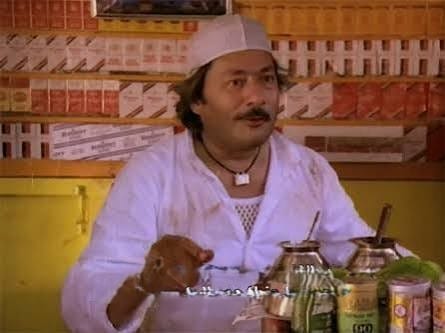
My earliest memory of paan isn’t from home. It comes from Chashme Buddoor and the unforgettable paanwala played by Saeed Jaffrey. With his katha-stained fingers, perpetually stuffed mouth and effortless banter, he made paan look impossibly urbane. His tiny kiosk wasn’t merely a shop; it was the neighbourhood’s newsroom, counselling centre, comedy club and gossip exchange rolled into one.
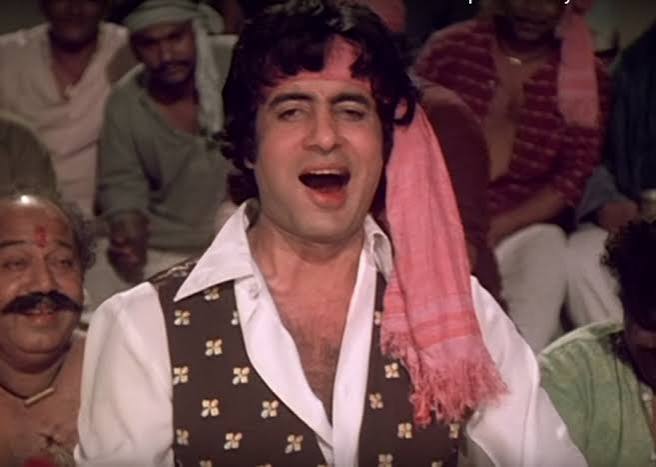
It was a very different image from the swaggering “Khaike Paan Banaras Wala” performed by Amitabh Bachchan in Don. That was paan as spectacle. Saeed Jaffrey’s paan was everyday civilisation.
Somewhere around that time began my own tryst with paan.
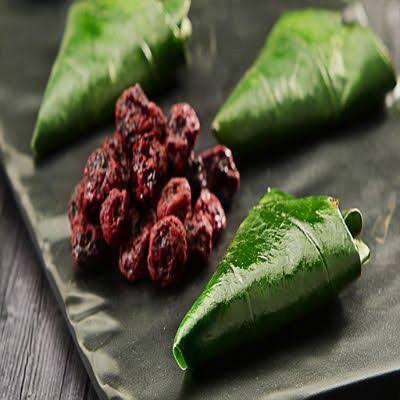
As it does for almost everyone, the rite of passage starts with the gloriously sweet meetha paan—bursting with gulkand, candied fennel, coconut shavings, tutti-frutti and enough sugar to guarantee lifelong loyalty. Most people remain happily married to this confection, occasionally asking for a little extra peppermint or an indulgent handful of sweetened coconut tucked inside the neatly folded green parcel.
Others graduate.
First comes sada paan. Then the mysterious-sounding sada jodi—simply two sada paans, with or without supari. And then there are the mountaineers who continue climbing until tobacco enters the picture and paan ceases to be a pleasant indulgence and becomes a lifelong companion.
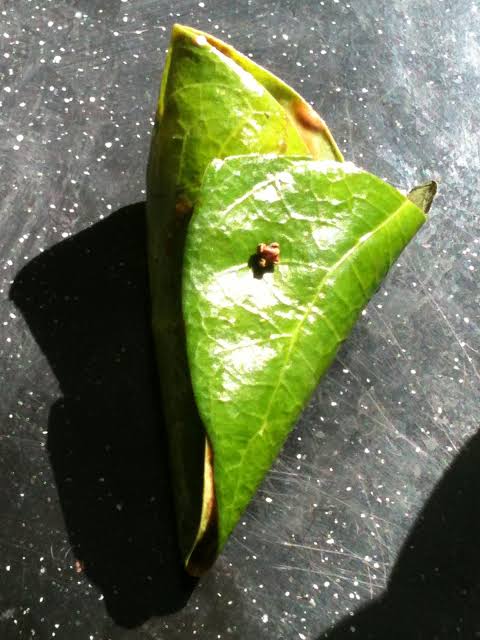
Yet wherever one chooses to stop on this leafy ladder, the ritual never changes.
The paanwala reaches for a fresh leaf resting under a damp cloth, trims its stalk with astonishing speed, paints katha and chuna with fingers permanently stained reddish-brown, sprinkles his closely guarded assortment of ingredients, folds the leaf into a perfect triangle and hands it over with the quiet confidence of a Michelin-starred chef plating his signature dish.The ingredients may change.The ceremony never does.
And then begins the real examination.
The moment the paan enters your mouth, diplomacy ends. Saliva gets to work, the ingredients awaken, the aroma intensifies and suddenly your cheeks resemble those of an overambitious squirrel preparing for winter.
With meetha paan, life is simple. You chew, relish the sugary symphony and swallow the entire glorious concoction without a second thought. Sada paan remains reasonably civilised. But introduce tobacco into the equation and the rules of engagement change completely. Swallowing is no longer an option. The mouth negotiates frantically with the brain for a suitable exit strategy.
And then comes the spit.It isn’t merely expelled; it is projected.
For generations, paan lovers have treated walls, staircases, railway platforms, government buildings and occasionally moving vehicles as if they were commissioned canvases. India’s most prolific public art movement wasn’t funded by a ministry. It was powered by katha, chuna and extraordinary confidence in one’s aim.
Long before paan became public wall art, however, it was valued for something far more practical—its remarkable digestive virtues.
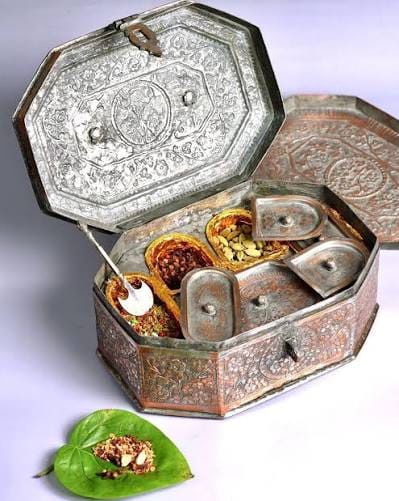
Every respectable household possessed a beautifully crafted paandan—a metal casket with individual compartments for betel leaves, katha, chuna, supari, cloves, cardamom and every imaginable embellishment. Preparing paan wasn’t a household chore; it was an act of refinement. Many nawabs travelled with their paandans, carried by attendants with the seriousness usually reserved for royal insignia. The perfect paan wasn’t bought. It was composed—with equal measures of taste, etiquette and digestion in mind.
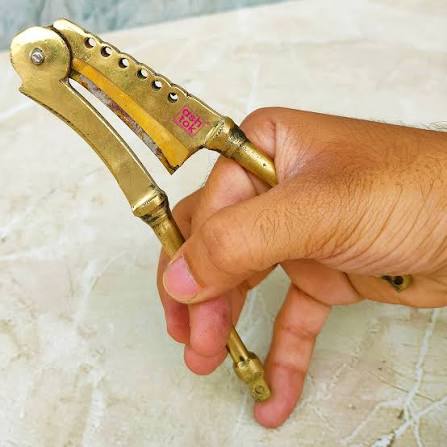
There was even the elegant sarauta, the beautifully crafted cutter designed specifically to split the stubborn betel nut into delicate slivers. In many old Lucknow households, elderly ladies still open their paandans with almost priestly reverence. Their fingers instinctively know how much katha to spread, how much chuna is just enough and how to fold the leaf into a perfect triangle. Recipes were never written down. They were inherited.
The ritual concluded with another object that has quietly vanished from Indian homes—the peekdaan.
In the drawing rooms of nawabs and old aristocratic households, the elegant spittoon occupied a place of honour. Spitting into a peekdaan was considered perfectly civilised. It was etiquette, not embarrassment. Somewhere along the way, however, the peekdaan disappeared, but the habit didn’t. Railway stations, government offices, staircases and public walls unwillingly inherited its responsibilities.
India’s greatest failure in urban planning may simply have been retiring the peekdaan before retiring the urge to spit.
The neighbourhood paan shop, meanwhile, remained India’s original social network.
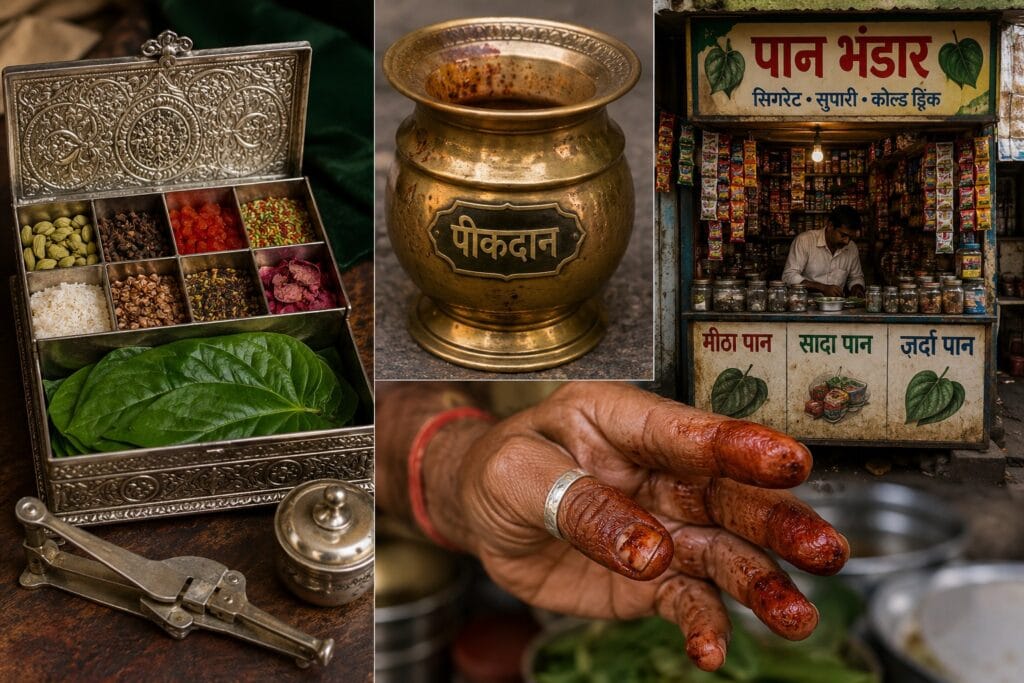
A tiny kiosk glowing under a solitary bulb, strings of cigarette packets fluttering overhead like festive buntings, colourful jars of mouth fresheners lined up in military precision and a constant stream of customers who rarely seemed to be in a hurry. Smokers came for cigarettes. Paan lovers for their evening fix. College students to waste time. Neighbourhood uncles to dissect politics, cricket, cinema and somebody else’s family affairs.
Before WhatsApp forwards, there was the paanwala.
Before podcasts, there were his stories.
If Google knows everything, the paanwala knew everyone.
Perhaps that explains why the humble paan shop has survived every modern invasion. Cafés arrived. Malls arrived. Food delivery apps arrived. Yet, at the corner of almost every Indian street, a paanwala still sits in his tiny kiosk, folding a betel leaf with the precision of a jeweller, assembling not merely a paan but a small piece of Indian civilisation.
Like many Indian traditions, paan began as a digestive, evolved into a delicacy, graduated into an addiction for some, and finally became a municipal challenge.
Now that’s what I call a full-bodied aftertaste.
Before you go…
If Paan after food satiates your cravings, you will definitely enjoy:
Dhurandhar of Grains: The Great North Indian Parantha;

Good one Sanjay
Thanks Ranjit. Keep checking for new posts. I still struggle on how to automate without unnecessary reminders. Havent cracket it yet. But I can inform you on whatsapp about latest post.