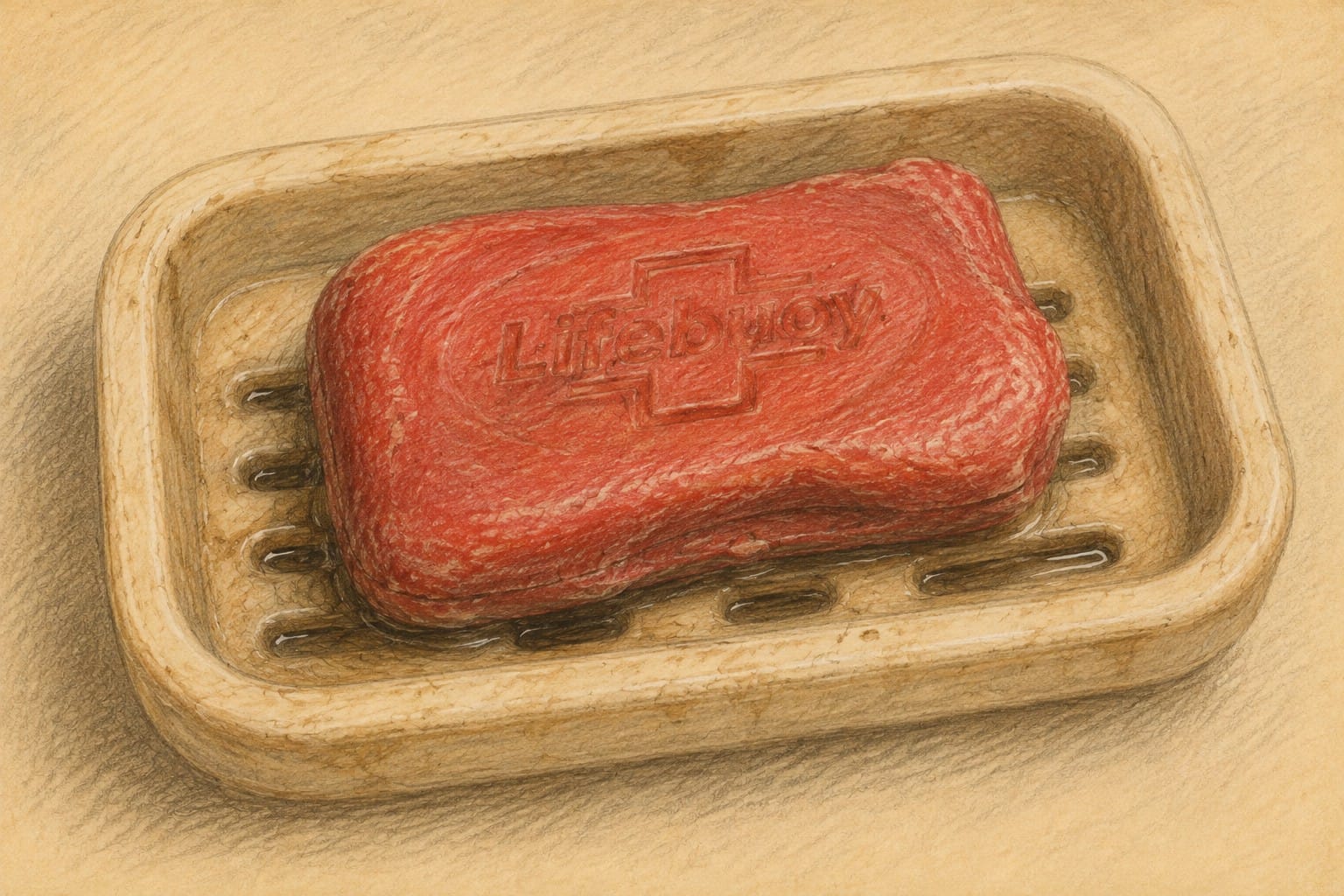
There was a time when the Indian bathroom had no design ambition whatsoever. It existed to get you clean and did not pretend to be anything more. There were no vitrified tiles, no Italian marble and certainly no Kohler or Jaguar mixer waiting to give you water at exactly the temperature you fancied. The floor was usually cement, sometimes divided into sections by those little glass strips, or finished in some rough gravelly material whose technical name nobody knew and nobody needed to know. There was one tap: tuti, as we called it : and hot water was a separate project altogether.
Either somebody brought in a bucket with hot water already mixed, or you used that dreadful immersion heater filament. It looked dangerous, behaved dangerously and seemed to burn more electricity than it heated water. When it burnt, which it occasionally did just when the water was beginning to get warm, the fuse could go with it. That started another familiar family adventure. Dad, elder brother or whichever male member had appointed himself technically qualified would walk to the fuse box, pull out the fuse, inspect the broken wire, attach another bit and push it back in. Calling an electrician for something like this would have been considered unnecessary expenditure. Circuit breakers were still some years away.
Once electricity and water had been restored, you went back to the bucket. Somewhere near the tuti, on a plastic soap dish with little holes underneath, sat Lifebuoy.
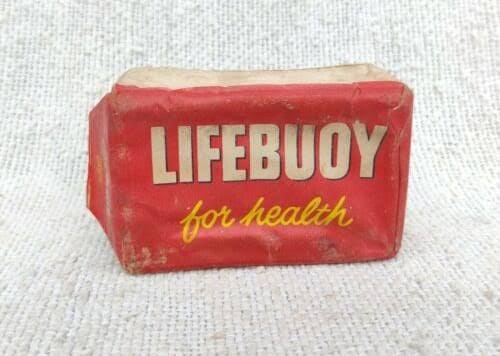
It was red, solid, almost indestructible and smelled, to my mind, like phenyl in solid form. There was nothing remotely subtle about that smell. Lifebuoy did not promise hydrated skin, natural oils, a balanced microbiome or twenty-four-hour freshness. You scrubbed yourself with it and whatever had attached itself to you during the day was expected to surrender. You did not come out feeling pampered. You came out feeling disinfected, which in those days was close enough.
Even the name remained a small mystery for years. Was it Lifeboy or Lifebuoy? What exactly was a buoy, and why was it involved in soap? We had all seen the spelling on the wrapper but nobody felt any great urge to investigate. Dictionaries were for school homework, not for understanding soap brands. We called it Life-boy and moved on.
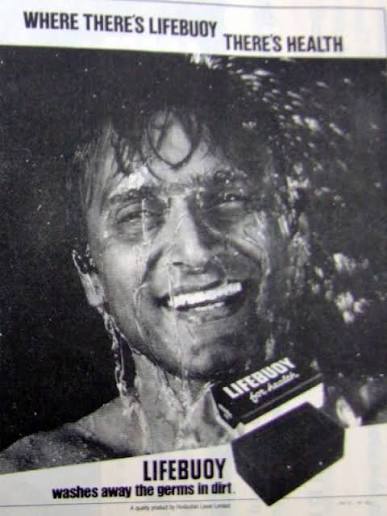
Lifebuoy was the common soap. Dad used it, boys used it, guests could use it and if somebody came back after playing cricket covered in dust, Lifebuoy dealt with the matter. Nobody stood in the bathroom wondering whether his face needed something gentler than his elbows. One bar had a fairly large job description and appeared perfectly capable of handling it.
The soap dish was part of the arrangement. Usually plastic, with those little drainage holes and a raised strip running through the middle, it was supposed to keep the soap from lying permanently in water. A fresh Lifebuoy rested comfortably on top, but as the weeks went by and the bar became thinner, that raised strip began cutting a groove into its underside. Eventually the mighty red brick was reduced to a miserable slice, bent around the ridge, slippery and almost impossible to hold.
Nobody threw it away because there were clearly baths left in it. Sometimes the final slice was pressed onto a fresh bar. Wet both, press hard, leave them together. They would separate during the next bath, so you pressed them together again. After a few days, through some combination of water, pressure and middle-class determination, the two became one ugly soap. Throwing away the old piece would have seemed far stranger.
Lux belonged to another world. In our house, and I suspect in many others, Lux generally belonged to Mom and the sisters. Film stars had been advertising it forever and that gave it standing. The women in those advertisements somehow managed to emerge from bathing looking glamorous, something nobody in our own house had achieved with a bucket, mug and damp towel. Lifebuoy belonged to everyone. Lux somehow had owners.
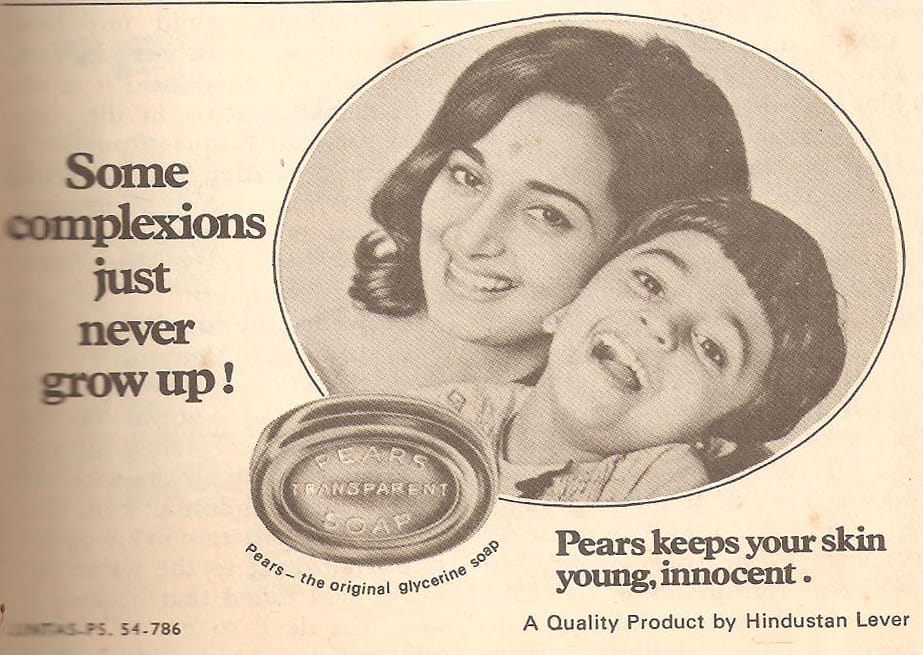
Pears was more aspirational still. That transparent amber bar fascinated us because you could actually see through it. Even that seemed technologically advanced. It was glycerine soap, another phrase that sounded expensive, and it was indeed many times more expensive than the ordinary soaps lying around the house. Sometimes it was bought, which immediately raised the stakes.
The advertisement with the tiny child peeping through the transparent soap at the mother lingered in the mind, as did that wonderful visual of the bar sliding gracefully down an arm. Naturally we tried it. You placed the Pears somewhere near the shoulder and waited for the elegant descent shown on television. It usually travelled a few inches, lost interest and fell straight onto the bathroom floor.
That was bad enough. Worse, because Pears was transparent and beautifully smooth, the fall left a visible bump on the surface. The expensive little jewel now had an ugly injury because you had believed the advertisement. You tried again anyway. It still fell. Advertising was clearly being conducted under bathroom conditions unavailable to ordinary households.
Hamam had an advertisement I never quite understood. The idea, presumably, was that this was the family soap. Dad passed it to Mom and then it seemed to travel around the family. Wholesome enough as a proposition, except visually it looked suspiciously as if everybody was bathing together. With a name like Hamam, the confusion became even worse. Was this some Turkish bath arrangement? Had the entire family entered one enormous bathroom? Perhaps I missed the finer advertising point. The soap sold anyway.
Margo was around with its uncompromising neem personality, while Mysore Sandal Soap had a richer smell and a certain old-world class. They belonged to the landscape without creating too much disturbance. Every family had its preferences, although nobody called them personal-care choices. They were simply the soaps that happened to be in the house.
Then Liril arrived and confused everybody.
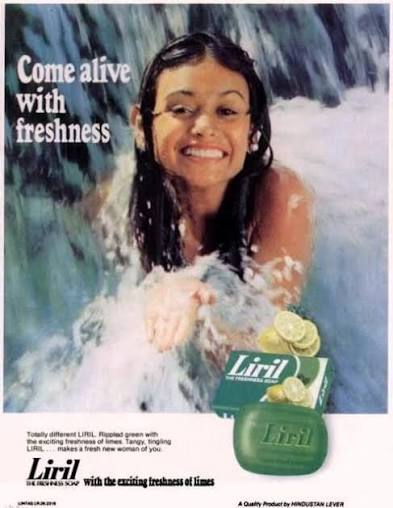
The girl in a bikini under the waterfall seemed to be bathing in another universe. We had cement floors, buckets, mugs, damp towels and somebody outside the door asking how much longer we intended to take. She had rocks, greenery, endless rushing water and nobody waiting for the bathroom. Nobody was shouting that the geyser had been left on, and water supply did not appear to concern anyone.
The aunties were particularly interesting. This was still a time when the sari remained quintessentially feminine, but more women were beginning to step out for work and a sari was not exactly a two-minute wardrobe. Salwar-kameez was easier, maxis and kaftans had entered homes, and somewhere the idea of what a modern woman could look like was loosening. Then television gave them this girl in a bikini under a waterfall, laughing as if she had nowhere to reach, no tiffin to pack and nobody calling from the next room.
They could be mildly scandalised by her and still, perhaps very privately, want to be her. That was the genius of Liril.
Cinthol came later and did roughly the same thing to the other half of the population. Vinod Khanna, on a horse on Juhu beach, was probably one of the more persuasive arguments for male grooming ever put on Indian television. He had the body, the horse, the beach and the confidence. We had Lifebuoy and a plastic bucket.
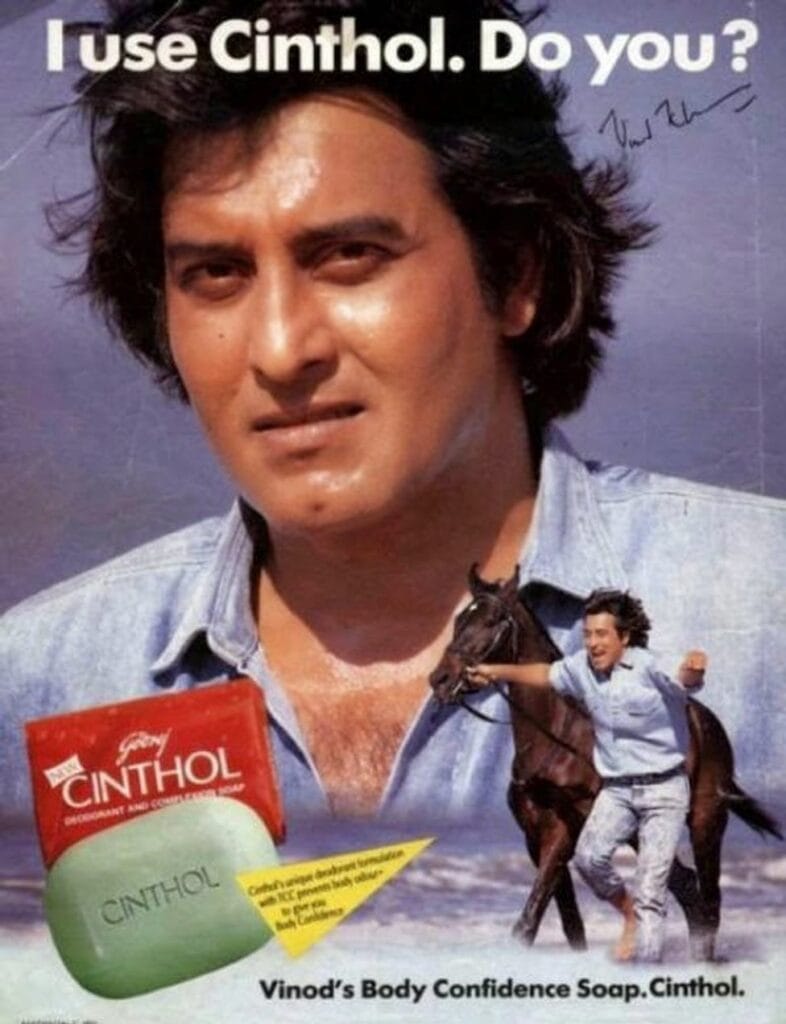
The uncles had their benchmark, while boys in whom testosterone had only faintly begun to announce itself had an even bigger one. This was still the age of pleated bell-bottoms and enormous collars, but nobody needed ripped denim, gym tights, sculpted beards or a six-pack sermon to establish masculinity. Vinod Khanna simply looked macho.
Until then most men had regarded soap as soap. Cinthol suggested there might be something more to the transaction. Perhaps swagger could also be purchased. For a generation of boys this was useful information. Maybe the difference between us and Vinod Khanna was not genetics, bone structure or movie-star charisma. Maybe we had simply been using the wrong soap.
By the late eighties another kind of aspiration had entered the soap dish: Camy.
Camy often arrived from abroad. Foreign cousins brought it back in suitcases along with chocolates, perfumes and other things that acquired automatic superiority simply because they had crossed immigration. The pure white wrapper itself looked elegant. Even if Camy was available here, the one brought from abroad somehow seemed better. There was no logical basis for this conclusion and none was required.
Around that time I was travelling regularly on the Shan-e-Punjab for work, selling boilers into the little industrial revolution then taking place across north India. On one of those chair-car journeys, Bhatia Aunty sitting behind me was explaining to Arora Aunty, with complete seriousness, that she only used Camy.
I still remember the way she said it. It was not merely information about soap. It was a small declaration of arrival. There was no Instagram then, no shelfie and no influencer displaying a twelve-step morning routine. Bhatia Aunty could establish her position perfectly well in a Shan-e-Punjab chair car by informing Arora Aunty that ordinary soap no longer entered her life.
Only Camy.
Today the soap dish has become a shelf, and the shelf has become personal. Body wash, face wash, moisturising bars, charcoal, sulphate-free, sensitive skin, men’s ranges, women’s ranges, serums and bottles whose purpose is sometimes known only to the person who bought them. Influencers are having a field day, assorted skin clinics are laughing their guts out while their accountants salivate over the billings, and Blinkit is delighted to deliver another miracle bottle in ten minutes.
The manufacturers are not complaining either. Quite often the same broad formulation reappears under a different label, with one ingredient pushed to the front and turned into the new catchphrase. Aloe vera this month, charcoal the next, niacinamide after that. The bottle changes, the promise changes and another shelf gets occupied.
Back then one red bar did most of the work.
Lux brought cinema, Pears brought glycerine, Liril brought a waterfall, Cinthol brought Vinod Khanna and Camy gave Bhatia Aunty something to announce on the Shan-e-Punjab.
Lifebuoy simply carried on sitting there, smelling faintly of phenyl and slowly wearing itself down to that last impossible slice.
We still had no idea what a buoy was.
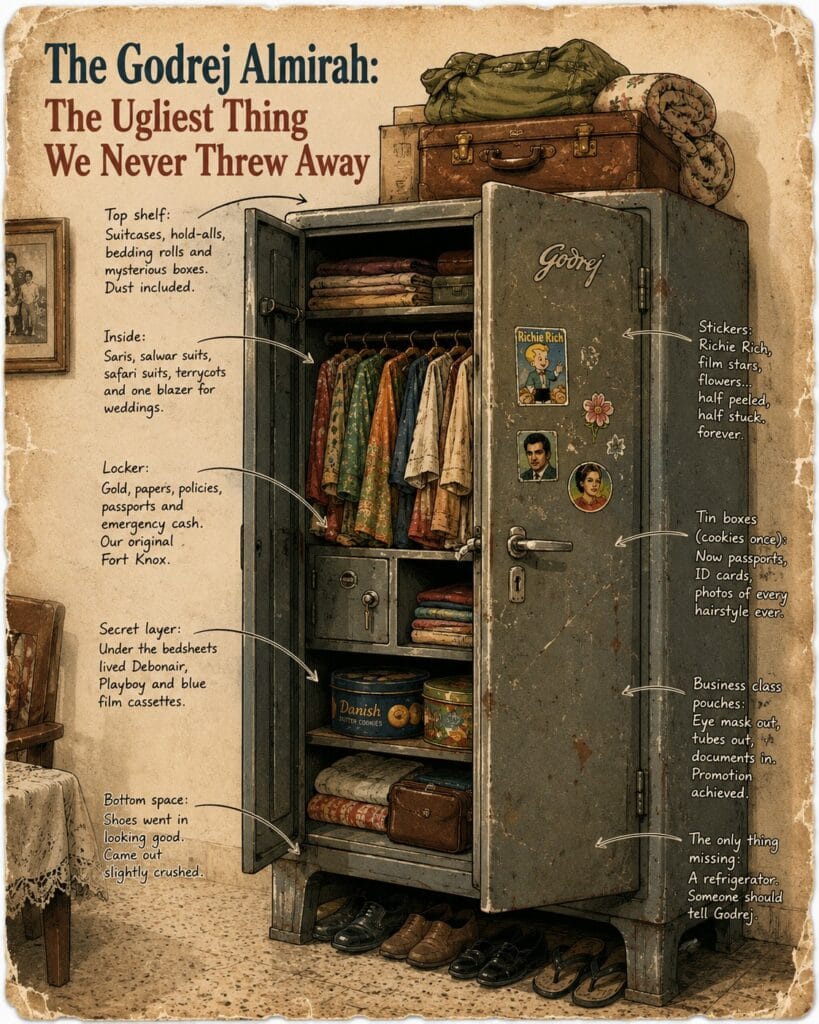
If you liked this, I’m sure you’ll enjoy The Godrej Almirah too — another everyday object that quietly carried an entire generation inside it.